Carbon Neutrality in the Fashion Industry

The fashion industry accounts for 10% global carbon emissions, using more energy and releasing more toxins than aviation and shipping combined. Climate change and the issues that expand along with it are slowly impending and proposing new resourceless forms of livelihood. One of the biggest issues causing climate change are carbon emissions, specifically created by the fast fashion industry. 

Environmental nonprofits all over the world are supporting the idea of “fossil-free” routes, encouraging fashion brands to partake in a new, cleaner journey of clothing production. They provided a 5 step plan which (simplified) reads as follows:

  1. Setting ambitious climate commitments with full transparency
  2. Centring renewable energy in supply chain decisions with specific commitments to phase out coal
  3. Advocating for renewable energy policies in supply chain countries
  4. Sourcing lower carbon and longer lasting materials
  5. Reducing the climate impacts of shipping

With this, brands are beginning to announce “carbon neutral” plans for further production.

Starting with the famous shoe brand, Allbirds. They released a statement, expressing they were going “100% carbon neutral” in order to address the fact that each company within this industry has a role to play. This followed the first ever carbon neutral product introduced in popular apparel and shoe store, Everlane. Clothing producers, Reformation, followed up with a statement and staying true to their claims of being carbon neutral since 2015. These brands are most popular with the younger generations, who have already shown great advancement in sustainability projects.

The millennial-friendly brands were joined in their sustainability journey by more luxury brands, such as Gabriela Hearst. They hosted the first carbon-neutral runway show at New York Fashion Week. The introduction of Gabriela Hearst sustainable collections in New York fashion week was notable following the backlash during London Fashion Week.  Extinction Rebellion (XR) launched a campaign which called on the British Fashion Council to cancel London Fashion Week. This demand wasn’t met; as a result, protestors staged ‘die-ins’ and a ‘fashion week funeral’, urging the fashion industry to take drastic action (Carbon Neutral Fashion Brands). 

French luxury group, Kering pledged to “become carbon neutral within its own operations and across the entire supply chain.” As a result of this, there was a notable rise in ‘carbon neutral’ fashion shows

To summarize the phrase, carbon neutrality refers to achieving net zero carbon dioxide emissions by matching carbon dioxide emissions with reduction or actually removing carbon dioxide emissions entirely; often by carbon offsetting or the transition to the “post-carbon economy.” (Carbon Neutrality).

However, claiming to transition into fully carbon neutral ways is easier said than done. Rather than cutting down on toxic processing to reduce the amount of carbon dioxide release, most companies who claim to be carbon neutral, achieve this through offsetting. 

Explained through XR Fashion Boycott team, representative Sara Arnold says “Brands are saying that they have carbon emissions which are essential; that instead of cutting them out, they’ll offset. So you calculate: there were that many flights taken, so we’ll plant this many trees. But carbon emissions have knock-on effects which should be taken into account, and there are feedback loops. We’re getting closer to tipping point.” (Carbon Neutral Fashion Brands). The external factors to consider are not taken into consideration because of the automatic assumption that small actions do not add up. She gives the example of a worker who lands a job planting trees, and celebrates by booking a holiday for his family, thus upping his emissions (Carbon Neutral Fashion Brands). 

The process of agricultural growth contains factors which prove harmful for the environment, longterm. The uses of agrochemicals on the land can be put into question, or the use of fossil-fuel based materials such as nylon and polyester. In order to become 100% carbon neutral, there are many parts of the industry to take into consideration. 

True carbon neutrality is a step forward in the journey to fashion sustainability. Still, in order to make an everlasting mark on the process, it is imperative for brands all over the world to partake in ethical processes from beginning to end. 

Gender Based Abuse in the Fashion Industry

Fast Fashion production cycles impact work conditions for women in the garment industry. Each fast fashion factory relies on unrelenting systematic gender-based violence and harassment, and the rate at which these grievances occur make it a normal situation for the workers. 

Manufacturing and factory occupations have been male-dominated areas of work, so when women enter the field, they are considered outsiders, therefore becoming victims of harassment. 

From January to May 2018, the Asia Floor Wage Alliance and Global Labor Justice  researchers documented gender based violence reported by female garment workers in 5 countries; Bangladesh, Cambodia, India, Indonesia, and Sri Lanka. The data was placed in five categories of violence: 

  1. Sexual harm and stigma
  2. Gendered industrial discipline practices
  3. Physically extractive labor practices—a practice termed mining of the body 
  4. Unsafe workplaces
  5. Production of insecurity through the reliance on contract labor 
    1. Threats of termination
    2. Barriers to freedom of association
    3. Retaliation for reporting

Fast fashion, production targets, and gender-based violence in Asian garment supply chains

Proven by the research, “over 540 workers alleged abusive incidents and reportedly blamed their employers for imposing lightning-quick turnarounds and minimal overhead costs” (Hundreds of H&M and Gap Factory Workers Abused Daily: Report).

Gender based violence is almost predictable in the environment created by the relentless fast fashion industry. Through impossible supply demand and release of new products daily, workers are worked to the bone in order to keep up with pressures and order. The low-wage occupations push the women to reach production targets with clear repercussions if they fail. 

The reports include many workplace malpractices, including GBV and general mistreatment. Rape, slapping, bullying and misuse of power to pursue inappropriate and forced relationships were very common amongst female workers. (GBV in GAP Garment Supply Chain).

In a report filed against an H&M factory in Bangalore states that the batch supervisor came in and physically assaulted one of the female workers for not reaching her target quota. The report describes the situation and following the assault, the worker, Radhika, filed a complaint. The supervisor was told to stop harassing her, but the situation never got better. 

When women in the manufacturing branch of fast fashion industries complain about harassment, their cries are overlooked. “In an Indian factory, Roja R., a married woman in her 30s, worked in the cutting division. She described how her supervisor stalked and repeatedly called her cell phone after work hours asking for sexual favors, promising that he would give her a lighter workload and sanction time-off whenever she wanted. When she complained to the factory’s administration, they said that he was a supervisor who had high productivity and told her such harassment was “normal” and that she needed to take it in stride.” (Combating Sexual Harassment in Garment Industry). 

Generally, one in six women are faced with gender based assault. In factories and workplaces, 50% of women have stepped out and complained about gender based violence, but the number of women who are assaulted and forced to keep quiet create a much larger ratio. 

“Of the 763 women interviewed in factories, in three Vietnamese provinces, 43.1% said they had suffered at  least one form of violence and/or harassment in the previous year. A large majority of those interviewed said they had experienced unwelcome verbal abuse and harassment in the past year. A third had experienced physical harassment such as kissing, touching, hitting, punching, or leaning.” (Sexual Abuse Fast Fashion ). 

Advocation for women’s rights and action plans against gender based inequalities have been addressing these issues for years now. However, until these allegations are taken seriously in the light of the public, the harassment and abuse will continue. Lives are ruined every day, and they will continue to unless people begin to take action and understand the distinctness of GBV and its effects. 

Read 6 Ways to End Gender Based Violence for a rundown of the issue.  

Make Your Holidays More Sustainable

Christmas is coming up, and along with loads of presents, decorations and excessive food, it’s the perfect time to celebrate sustainably. It is not difficult to enjoy Christmas in a more eco-friendly way, from choosing a sustainable tree, to ethical christmas gifts; here is a list to guide you through your journey to a more ethical holiday season. 

Christmas Trees

For years the debate of real Christmas trees vs. artificial Christmas trees has created a divide. Despite your preference, there is always a way to make your choice more sustainable. 

If you prefer a real tree, solely purchase those with an FSC Certification, proving it was produced sustainably. To take the next step, keep an eye out for Soil Association stamp to ensure it’s organic. Regarding disposal, after the holidays, take your tree to a local tip. Many communities offer free Christmas tree recycling to make mulch, compost, and woodchips from the trees. 

If you choose to purchase an artificial tree, look to buy second hand. If you have searched on eBay, Gumtree and Facebook Marketplace but have not found anything, look to buy a new artificial tree that will last a lifetime, rather than one which needs replacement after every few years. 

Decorations 

Choosing sustainable decorations that last a lifetime will not only help the environment, but over time, your wallet too. Without the eco-friendly options, the extra waste amounts to 25 million tons of garbage, or about 1 million extra tons per week! If every family reused just two feet of holiday ribbon, the 38,000 miles of ribbon saved could tie a bow around the entire planet (FAQ Holiday Waste Prevention). An extra 30% of rubbish is produced and discarded throughout the festive period when compared with the rest of the year, the additional waste amounting to about 3 million tons. The UK will also throw away approximately 500 tons of Christmas lights each year (An Often Overlooked Part of Christmas). 

Decorations made from recycled glass, fabric and wood are better alternatives when compared to more common, non recyclable materials, such as PVC options. Additionally, investing in more expensive, yet sustainable decorations will last a much longer time. Purchasing timeless, classical designs and decor is highly recommended. 

Gift Wrapping

Green Gift Wrap : Brown paper wrapping with raffia and sprigs.

After picking out your gifts, it’s time for the gift wrapping. Keep an eye out for environmentally friendly gift wrap, be creative!

  • Reuse gift bags, boxes and tissues from previous years and events. If you don’t have any saved, start saving this year!
  • Use recycled brown paper for wrapping and spice it up with a ribbon or artsy finish using string, pine tree sprigs or raffia. 
  • Wrap your presents in a fabric scarf. A two in one gift idea, and the recipient will love it!
  • If buying new wrapping paper, choose reusable/recyclable materials, try to avoid foil and glitter bearing paper. (16 Tips for an Eco-Friendly Christmas)

Create new sustainable traditions and adopt them for a new, happier life (which comes with a smaller footprint)!

Water and Fashion: RiverBlue Summary

Film Synopsis

Through harsh chemical manufacturing processes and the irresponsible disposal of toxic chemical waste, one of our favorite iconic products has destroyed rivers and impacted the lives of people who count on these waterways for their survival. RIVERBLUE brings awareness to the destruction of some of the world’s most vital rivers through the manufacturing of our clothing, but will also act as a demand for significant change in the textile industry from the top fashion brands that can make a difference. (Visit RiverBlue

RIVERBLUE – Collective Eye Films

Award-winning documentary, RiverBlue, narrated by water-supporter Jason Priestley observes internationally celebrated river conservationist, Mark Angelo in an adventure to uncover the secrets of the fashion industry. Travelling all over the globe to investigate the world’s second most polluting industry, this documentary exposes images and anecdotes addressing issues the industry progresses upon and the destruction it’s doing to the planet. It focuses on the river destruction, the effects on humanity and possible hope for a future in sustainability. 

Specifically addressing the world’s most untarnished waterways to the most polluted, the film introduces viewers to the tragically under-reported water pollution problem. Through the harsh chemical production process and improper disposal of waste created during manufacturing, the creation of our everyday clothing is the cause of water-body deterioration (Water Docs). 

The documentary’s trailer addresses the necessity for water and the way it accommodates all of our needs as humans. The need for water remains the same, however the usage of water bodies grows progressively worse over time, especially with the implementation of factories and manufacturers in the present day. Because of irresponsible waste disposal, rivers across the world are deeply impacted by the dumping of poisonous toxic material. Each piece of clothing comes with a cost. Each part of the clothing production process has proved harmful to the environment. Starting with the removal of ecosystems to create factories, to stripping land of nutrients by growing energy-sucking crops like cotton. Then the fabric dye used in the designing process containing hazardous materials, the distribution of garments spreading air pollution, and finally, the disposal process of waste and used garments. The chemicals used in production processes do not break down, instead they travel around the world. The trailer specifically touches upon how companies divert attention from their manufacturing and waste disposal processes and keep their customers in the dark. The factory pipes are underground so nobody can see the factories dumping materials into water; contaminated liquids and materials are then placed into irrigation canals and this enters the food chain. 

The Fashion Industry and Water: Statistics

80 billion garments of clothes are being delivered out of factories per year (The High Price of Fast Fashion), creating tons of waste through production and disposal.

Nearly 20% of global water waste is produced by the fashion industry (United Nations Partnership on Sustainable Fashion and the SDG’s) and textile dyeing is the second largest polluter of water globally.

It takes around 2,000 gallons of water to make a typical pair of jeans (UN Environment Program) and 20,000 liters of water is used to create one kilogram of cotton, which is equal to one tshirt and a pair of jeans (World Wildlife Foundation).

Overall, the textile industry is one of the top 3 water wasting industries, discharging over 2.5 billion tons of waste water annually (Edge Fashion Intelligence).  

The fashion industry and its impact on water purity and availability is an unavoidable subject when addressing sustainability. Open your eyes and see how the creation of garments has progressed in such a way it has caused water to globally regress. 

“Buying something at a lower price actually contributes to the death, illness and suffering of people in some other part of the world” (RiverBlue Trailer

How to Make Your Diwali More Eco-Friendly

Diwali is the festival of lights, a time for festivities and cheer, where families and friends get together and exchange presents, eat sweets, and light up their homes with diyas and rangoli art. It symbolizes “victory of light over darkness, good over evil, and knowledge over ignorance.” and is widely observed. The sense of warmth, appreciation and togetherness that this holiday provokes plays a large part in it’s importance and reputation. Celebrated by millions of people, starting in South Asia and the West Indies, now all over the world, the celebration spans the month of October or November. The occasion lasts for five days, but the festivities last for weeks. 

People get together and light the sky up, and while there is no denying the beauty in the  traditional activity, there are some environmental impacts that tend to get overlooked. The action of individually lighting fireworks and firecrackers (during all celebrations which call for it) in itself is not harmful enough, but added together, the effects are causing a strain.

There are ways of maintaining the air pollution that is generated, while still being able to have fun and participate in activities, it is just important not to overdo it- simply for the sake of the bigger ecological picture. 

Fireworks and diwali go hand in hand, although lately this celebration tactic has gone overboard. Fireworks create dire consequences, during all phases of its lifeline. During production, the chemicals used in the manufacturing process pollute surroundings and create large buildups of waste. During combustion, the chemicals can put the surrounding people at risk. It is a real threat for people with asthma or chemical sensitivity. The inhalation of these chemicals can also cause breathing difficulties, and highly populated cities like Delhi face the brunt of impact  with the nearly suffocating air. 

Additionally, the greenhouse gases released from fireworks jeopardize the planet’s stability. Over-accumulation of greenhouse gases causes a buildup in the atmosphere, creating a blanket and warming the overall temperature. The steady climate rise comes with it’s own list of problems, destroying habitats, resources and posing a great threat to majority ecosystems, if not all. 

Alternative Solutions

Putting an end to the usage of fireworks is not an option most people would consider, so there are alternatives to make the most of the fun, while limiting possible dangerous reactions. 

  1. Reducing the days of celebration.

The occasion lasts five days, but celebrations go on for weeks before and after the said five. Each get together consists of hour of lighting firecrackers and fireworks, and with more than 1 billion people celebrating, the effects add up to be outrageous. In 2019, days before Diwali, New Delhi citizens were concerned for their own welfare, scared of what would happen when the diwali celebrations clashed with the unhealthy air quality and smog. The air quality index, which ranks pollution from 0-500, reached 256, classified as “very unhealthy.” Rather than lighting fireworks every day for an entire month each year, it is better to limit celebrations to one or two nights. This way it stays true to the original celebration of 5 days, and reduces the amount of unnecessary pollution. 

  1. Reducing the hours spent celebrating.

Rather than lighting fireworks for the entire night, creating both air and noise pollution, setting time regulations would prove beneficial. This will make the event more exciteful and inviting, rather than overtime becoming a nuisance to those not participating. Having set times would increase anticipation for the event and would likely have better social results. Additionally, reducing and regulating the hours spent on launching fireworks is sure to bring down the overall collection of unclean air and over time it;s impact will begin to show clearly. 

Waste Buildup

The accumulation of waste is highly unsustainable, and a lot of the waste is not disposed of properly. It is not uncommon to see used firecrackers heaped up in corners on the streets, and while this is already harmful to the environmental growth of the location, it is highly toxic for any animal or living thing that could unknowingly ingest it. 

There are proper ways to dispose of used firecrackers.

  1. Submerge firecrackers into a bucket of water
  2. Leave submerged overnight
  3. Double wrap firecrackers in plastic wrap so it does not dry out
  4. Place inside a regular garbage bag and take it to your solid waste facility. 

Health Effects

This article previously mentioned the effect chemicals from combusting fireworks have on people. 

Here is a list of more specific issues triggered by the chemicals released from firecrackers:

The Ill Effects of Firecrackers

It is important to raise awareness about the environment and it’s steady deterioration. Changing our lives in these small ways can have the greatest impact and people must be reminded to never overlook the smallest actions they can do to create a better future. 

How To Fall In Love With Your Wardrobe Again

Contrary to common misconception, wearing the same clothes does not have to be boring or uninspired. Experimenting between different styles in your own wardrobe can heighten your own love for fashion, while being the most sustainable option. There are different ways to fall back in love with your closet. By following these steps, your wallet won’t be the only one thanking you; rewearing clothing you already own is one of the highest forms of ethical fashion and reducing your footprint. 

Aesthetic clothing – Casual and Formal wears are relatively cheap

1. Disregard Fashion Trends 

Overtime, fashion trends have gotten increasingly ridiculous, with the constant changes of nearly 52 micro-trends a year. It is better to simply ignore them, rather than fall into their trap. A way to do this is to stick to buying classical, sustainable pieces with long lifelines that can be paired in different ways. By unadhering to fashion trends, you are more likely to find your own preferred style. This way, you will stop unnecessarily buying new clothing whenever new trends come into the picture- and as a result, you will have less clutter and useless, unworn clothing taking up space. 

2. Wear Your Star Pieces More Regularly 

Special pieces often find themselves sitting in the back of the closet, waiting to come out. Usually, more special clothing is not worn as much because of the fear of over usage and eventual demise. The common tearing, staining and generally spoiled scenarios want to be avoided, therefore these clothes are rarely used. Wearing them more often is a great place to start. Clothes are bound to get damaged, but better to wear it to the extent and enjoy wearing it, than to let it rot alone. These star pieces can be dressed up or dressed down, it’s all about the accessories and the way you style them. 

3. Purge Your Closet 

Sometimes, the best thing you can do for your closet is to give it a ruthless purge. Start from the beginning, empty out your closet entirely and then get started. Purging is different from your end-of-the-season cleaning; rather than removing all the seasonal clothing that are damaged or out of style, you go through it ALL. There are countless garments that you have “just in case” that you really just forgot about, or will never wear. Tidying expert, Marie Kondo, refers to this tactic and goes in depth in her book, The Life-Changing Magic of Tidying Up. To effectively purge your closet, follow these four steps:

Step 1: Empty Out Your Closet

Take out all your clothes, everything from the attic, storage, and laundry. Start with the full lot to get the biggest picture of what you have and to purge most effectively. 

Step 2: Sort Each Item Into 4 Piles

Love It- Something you can’t see yourself living without, and fitting for the current season can be put right back into your closet. 

Maybe- If it doesn’t feel just right, whether it be the color or the fit; put it into a box and if over the course of the season you find yourself wanting it, go get it. If you feel no urge to bring it out, then it’s time to donate it.

Hate It- Straight to donation.

Seasonal- If it is not in season but you wear it frequently and love it, then store it in a box until the season comes around, and bring it out when the time is appropriate. 

Step 3: Assess What’s Left In Your Closet

Live with you clothes for a while before deciding whether you need to go and shop for more. This is when you begin to consider shopping less frequently, and more sustainably.

Step 4: Shop

Make a list of what you need, and shop smart. Ask yourself whether you will wear it often, whether it can be paired with different outfits, if it is good quality and sustainable. Think before you buy.

“When you feel like you have a closet full of clothes, and nothing to wear, start by purging your closet.”

Check out How To Purge Your Closet and Love Your Wardrobe for more information on the process. 

4. Rearrange and Organize Your Closet

Overtime, our closets get organized in such a way that the most used clothing stays in the front, while the ones that are used less get pushed further back. Reorganize in such a way that all the clothes are visible to you, so you can create different combinations and make your old clothes feel new. Make your closet easy to navigate, so you see your variety of options rather than sticking to the overused ones. Don’t shy off from trying new combinations until you find one that works. 

5. Keep Clothes Away During The Off-Season 

Having a capsule wardrobe can involve small tricks, such as removing off season clothing, and then adding them back to your closet when the season starts up again. During summer, put your sweaters and cardigans away and keep your shorts and tank tops. Once cooler weather starts rolling around again, bring it all back out and you’ll find yourself feeling more excited to wear them all again. It can also bring a freshness and creativity to one’s wardrobe and outfit planning (Fall In Love With Your Closet Again). 

Follow these steps and regularly perform some of these recommendations, and your closet will never feel dull again. Fall back in love with your own fashion. 

Plastic Inside Your Clothes: The Impact and Solution

Humans have been generating more plastic waste now than ever before. Plastic and it’s byproducts can be found in nearly everything, and the waste litters our oceans and cities. It has a large contribution to stemming health issues, in both animals and humans. The fact that plastic cannot be escaped is proved even further when clothes are taken into consideration. The irresponsible usage and lack of upcycling has major short-term and long-term effects. 

It is clear that people have begun to be more conscious, by resisting the usage of plastic utensils, bottles and packaging- but people fail to realize that even their clothes contain plastic. 60% of clothing produced is made from plastic. Considering there are 16.9 million tons of clothing produced each year, it is important to realize that about 10,200,000 tons from that is plastic. What happens to it? Where does it all go?

A new problem arising from the usage of plastic in clothing, are the tiny microplastics (microfibers). When garments are washed in the washing machine, and the water is later disposed of, the microfibers get released into the environment. According to Plymouth University UK, each washing machine cycle can release 700,000 microscopic particles into the the world, infiltrating natural habitats. The study goes on to explain that a single person can release 300 million polyester particles, simply as a result of running their washing machine.

Which materials contain plastic?

  • Polyester
  • Polyamide
  • Spandex (lycra)
  • Acetate
  • Vegan Leather
  • Elastane
  • Acrylic
  • Nylon

Blends of these materials, especially containing synthetics are especially difficult because they are rarely recyclable and still release microfibers. Acrylic has proven to be one of the worst fabrics in this category.  An average washing load could release ~728,789 fibers from acrylic, ~137,951 fibers from polyester-cotton blend fabric, and ~496,030 fibers from polyester. 

The released fibers prove to be catastrophic for the environment. After being released into the environment, it is consumed by animals. The material proceeds to clog their guts and the animals commonly face death as a result. 

To prevent this problem from creating a larger impact, it is important to take a stand and learn about different solutions. Every time you go to buy clothes, buy sustainable fabrics. Investing in high quality materials leads to longer usage and less waste. The longer materials are used, the less plastic is wasted. 

Choose natural, biodegradable materials such as organic cotton, recycled cotton, bamboo, and Tencel. One of the most sustainable options include upcycling from your own wardrobe. Experiment with revamping your own wardrobe, stop investing in more unethical clothing. 

Wash your clothing less often, make sure you wash and buy with reason. The more frequently you wash your clothing, the more microfibers are released. Washing them in cooler temperatures for shorter amounts of time proves successful. Always be careful with how you dispose of your clothing and never undermine the beauty of upcycling. 

Check out 9 Sustainable Fabrics To Be On the Lookout For for more ideas about which materials to invest in. 

Alex James: Slowing Down Fast Fashion Summary

5 Must-See Fast Fashion Documentaries | Shop Ethical and Organic Apparel  for Kids
Documentary Film by Alex James

Film Synopsis: 

Alex James, Blur bassist turned cheese maker, presents this critical look at our disposable approach to clothing and it’s enormous human and environmental cost. Far from predicting the apocalypse, Slowing Down Fast Fashion seeks to provide solutions. By talking to designers, activists and high street brands, the film shows that there is a wide ranging and ever growing thirst for change. (IMDB, AMAZON.com)

Documentary Summary

English musician Alex James became familiar with the term “fast fashion” during his days on tour. Rockstars are constantly being sent new clothing, with no addression of the environmental factors. James found this outrageous and began avoiding Fast Fashion from the beginning, by negotiating whether new pants and socks were necessary. The first step to solving a problem, is acknowledging that you are part of it, as he did. With that, he began his exploration of fast fashion.

He began by explaining that the answer to the problem is hypothesizing positive action. The first thing we have to do, is ask ourselves these 5 questions:

  • How can it be so cheap?
  • What is it made of?
  • Who made it?
  • How long will you wear it?
  • Where will it end up?

Clothes are disposable. They are not created with the intention to last a lifetime. However, Fast Fashion rarely lasts one season. Before the introduction of fast fashion, there were 4 clothing seasons in one year. Now, there are 52, with new styles coming out every week. Fast fashion clothing cannot even sustain a short lifetime.

50% of clothing we own ends up in landfills (washington post), and 80% of what we wear is made up of petroleum- which is non-degradable. Throwing clothes in landfills is a unsustainable option. After asking yourself questions before purchase, it is also important to come with a knowledge of clothes you intend on wearing. 

Researching provenance is important, because it gives a better understanding of the clothes that you will purchase.

The documentary shows a slip where Alex directs the viewer to a “Keep away from fire” tag on a garment. He then performs an experiment to show the difference between acrylic and wool. He chose two identical sweaters, one acrylic and one made from wool, and set them both on fire. The acrylic sweater automatically caught fire, melted and stuck to the floor. The wool sweater began to burn but it did not catch fire. This shows the difference between the quality, and while the acrylic would have been cheaper, it’s quality was terrible. This highlights the importance of focusing on fabrics and materials which are good quality. This will not only keep you safer in such situations, but also will have a better financial outcome for the buyer in the long run. Rather than being forced to purchase new clothes every week as a result of cheap quality, you will get more out of your money by spending it on clothing with longer lives. 

The bottom line is the question, what can we do about it? 

Per Alex:

  • Research provenance
  • Buy less and buy natural
  • Look at labels and know fabrics
  • Think about who made it
  • Think about where it will go
  • Buy quality, no matter the age
  • Repair the clothes you love
  • Buy from charity shops
  • Upcycle

In the end, you need to ask yourself, is participating in this industry worth it in the long run? 

Watch Alex James: Slowing Down Fast Fashion for more

Watch Trailer

5 Trendy & Ethical Shoe Brands

TOP 6 ETHICAL WINTER SHOES

With 20 billion pairs of shoes produced annually, and according to the U.S. Department of the Interior, at least 300 million pairs of shoes thrown away each year- the footwear industry is one of the most wasteful. These shoes end up in landfills, where they can take 30 to 40 years to decompose. Most shoes are made from unsustainable and nonbiodegradable materials, proving the waste to be harmful to the furthest extent. Additionally, the creation process of these shoes “use virgin plastic, rubber, and petroleum, producing alarming amounts of carbon dioxide” (BUSINESS INSIDER.COM).

The problem with carbon dioxide is that it is a greenhouse gas. This means, the buildup of CO2 in the air creates a cover in the atmosphere, which traps the heat from the sunlight. This causes immediate fluctuating temperatures, and overall, a steady rise. The unnatural temperature increase plays a big role in global warming and rising sea temperatures consequently. 

In order to prevent these negative results, it is important to be aware about how sustainable your preferred shoe brands are. That said, here is a compiled list of recommended, sustainable footwear brands. 

  1. Nothing New

This startup was founded in 2014, with a different mindset in comparison to other already-popular brands. While other brands strive to change their unsustainable materials, Nothing New’s core idea is sustainability. 

As the name explains, Nothing New is made from only recycled materials. No virgin materials are used, in any part of the shoe. All the way from the recycled plastic laces to the recycled rubber/cork soles. 

Additionally, Nothing New offers $20 discounts on new pairs to those who send back their used sneakers. Depending on the condition of the sneakers, Nothing New will clean and donate them or break them down and put the materials back into its recycled supply chain (BUSINESS INSIDER.COM).

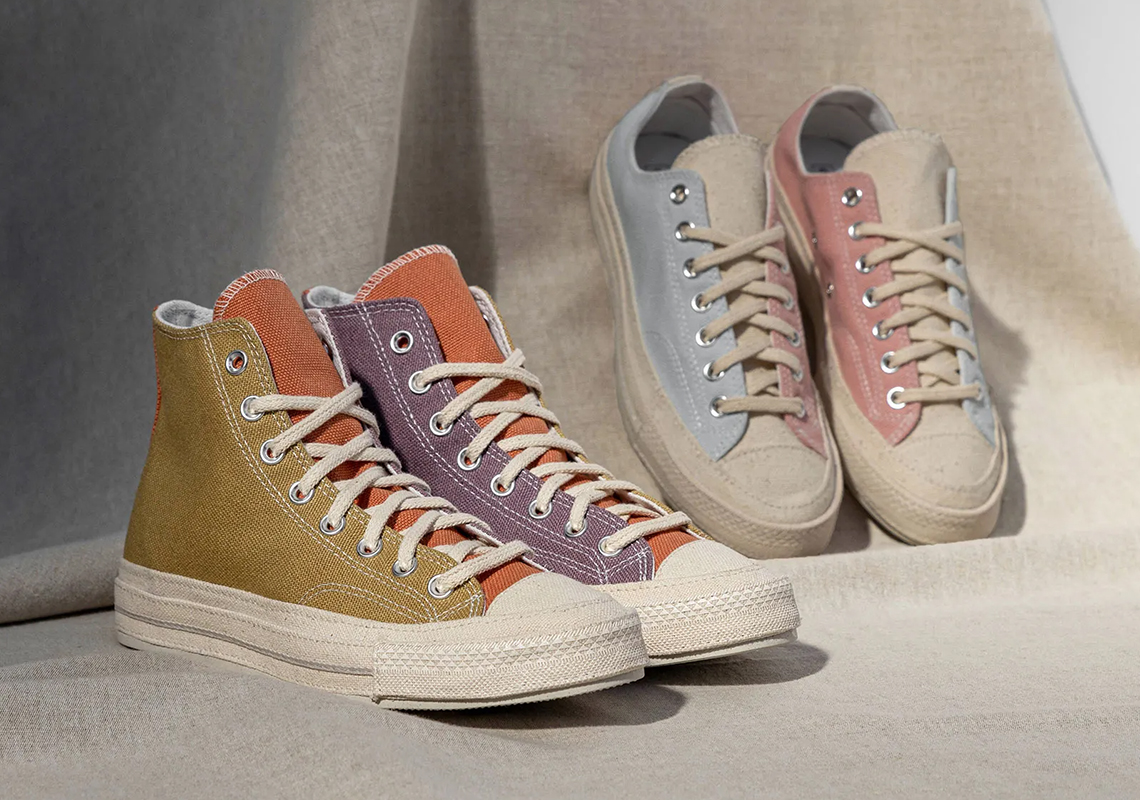
  1. Converse Renew
Converse Chuck 70 Tri-Panel Renew Release Date | SneakerNews.com

Converse is one of the most timeless shoe brands in the world, and they are still able to keep up with modern demands. They have created a new line of shoes, made from recycled materials. The canvas upper is made from recycled water bottles, polyester and other waste scraps. They renew denim and jeans, and reuse cotton

  1. Allbirds
Sustainable Shoes | The Most Comfortable Shoes in The World | Allbirds

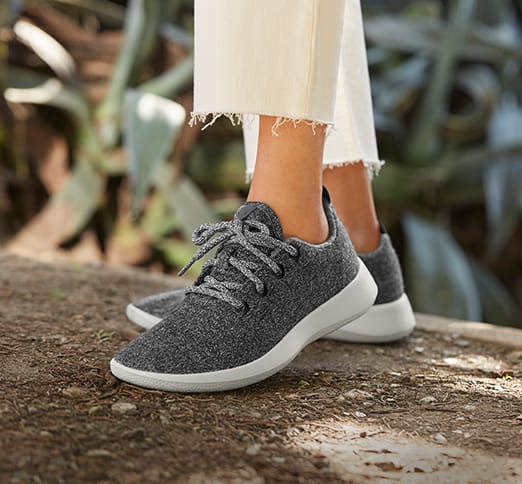
In just about 4 years, Allbirds is valued at about $77.5 million. Their footwear is unmatched in reliability and comfort. The standard sneaker emits 12.5 kg CO2e, while their average shoe emits 7.6 kg CO2e. The goal is to have no carbon footprint, which the team is working toward. 

The shoes are made from merino wool, eucalyptus trees, sugar cane, castor bean oil and recycled plastic. The shoes are even packaged in 90% post consumer recycled cardboard with many uses. 

Visit Allbirds Sustainability page.

  1. Veja
Veja V10 Sneaker Review and Esplar Comparison in 2020 | Sneaker outfits  women, Fashion jackson, Casual chic outfit

Veja is a French brand known for ethical production of sneakers. Materials such as rubber and cotton are used sparingly, sourced from farmers. They also just released a new sneaker called B-mesh, which is made from recycled plastic water bottles- all the materials coming together to create a breathable and waterproof shoe. 

  1. Everlane
All Of The Spring Shoes In Everlane's 'Choose What You Pay' Section |  HuffPost Life

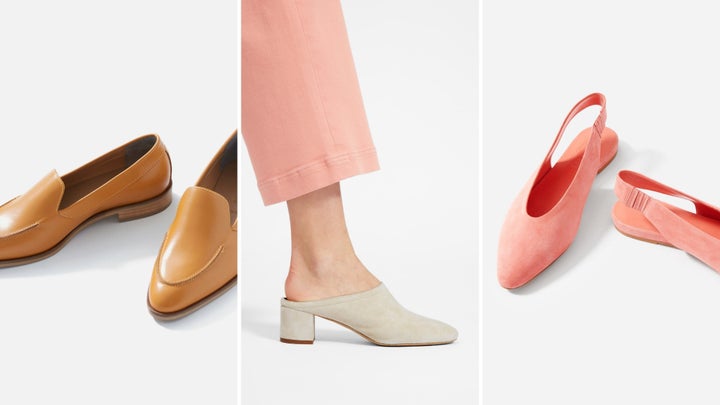
Everlane is an AMerican clothing retailer, with ethical factories for their material production. The clothing primarily come from factories located in Italy, and they specialize in countless different styles. The factory recycles 98% of its water, uses renewable energy produced onsite, and repurpose byproducts to create affordable homes. 

Visit Everlane’s Sustainability page

Shoe production and disposal have a large environmental footprint, and the constant purchase of these materials have tremendous environmental defects. Do your research before purchasing shoes and always think sustainably. 

Consumer Sentiment on Sustainble Fashion During Covid-19

McKinsey & Company | Global management consulting
All statistics in this article are derived from McKinsey Survey& Article

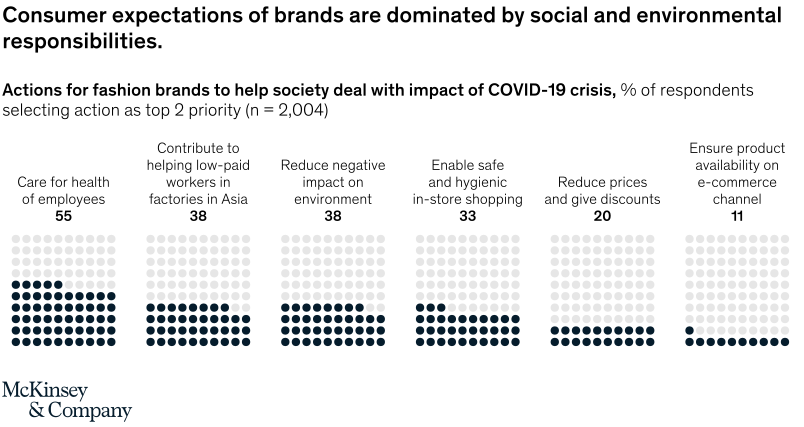
When the Coronavirus was hitting new heights, McKinsey & Company sent out a survey to gain information on customer sentiment on the topic of sustainable fashion. In April of 2020, the survey was conducted on more than 2,000 individuals, all stemming from different age groups, to gather a variety of data. 

Following the spread of Covid-19, sentiment toward the fashion industry changed. Consumers began to notice the environment impact the fashion industry had growth to have, and how the Earth benefited from the virus. For some time, clothing demand lessened, giving the planet a break. There was less wastage and less creation from the factories themselves. According to the survey, two-thirds of consumers believe that limiting the impact on climate change is imperative, and 88% believe that more attention should be paid on reducing pollution. (McKINSEY SURVEY)

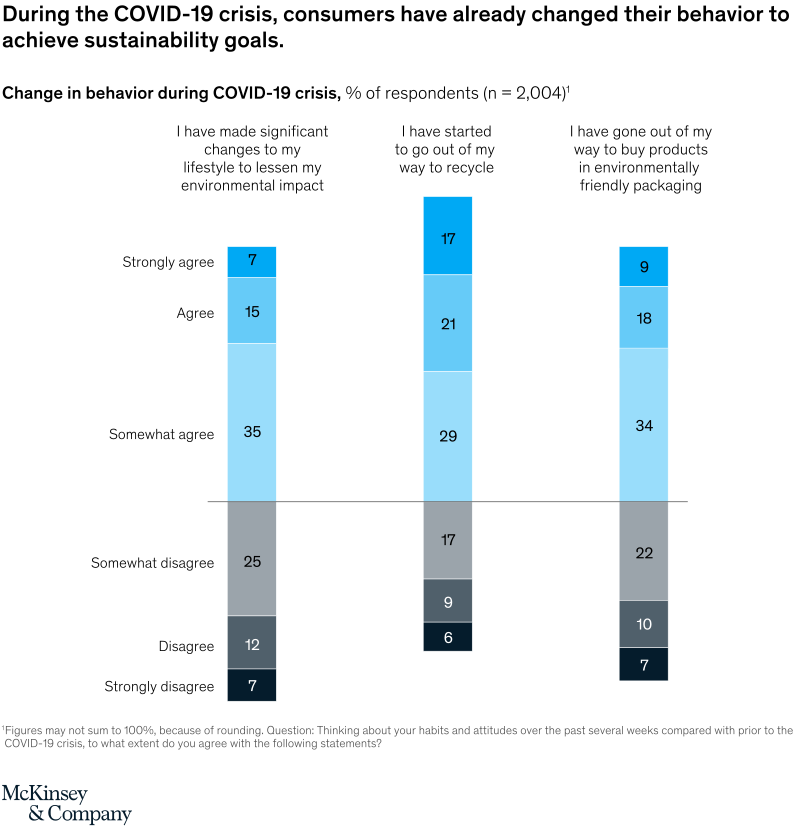
Additionally, the pandemic has pushed people to to change their behavior to reach sustainability goals. 

It is also important to note that consumers have begun to pay heavy attention to the social and environmental effects clothing companies have. Maintaining ethical connections is vital for a company to be deemed trustworthy. 

Purchasing behavior has also seen a shift. Consumer spending on fashion is decreasing, and this is having major environmental responses. More than 60% of consumers spend less money on clothing as a result of the pandemic, and about half are expected to continue this trend even after the pandemic passes. Additionally, as a result of Covid-19, 65% of survey responses state that those consumers are planning on purchasing more durable items. 71% of respondents say that they are planning on using the clothing they already have for longer. (McKINSEY SURVEY)

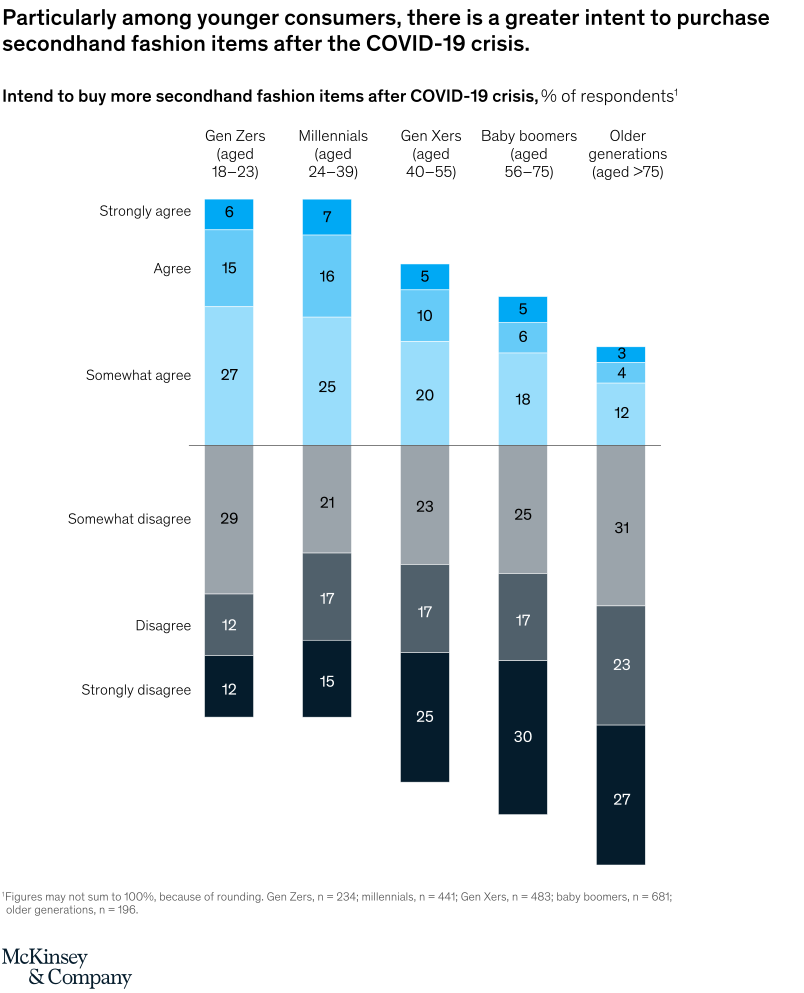
Finally, the acceptance and usage of second-hand clothing has increased. Around 50% of Gen-Z and Millenials are planning on purchasing more second-hand clothing. 

The overall analysis of this survey proves that simply changing your mindset can have a large impact in the long run. The occurrence of a global pandemic has pushed consumers to think more thoroughly, therefore getting more promising solutions for the future. 

“Consumer sentiment suggests that the COVID-19 crisis could serve as a reset opportunity” (McKINSEY SURVEY).

Take the poll and read the full article.