Top 5 Online Thrift Stores

We know that thrifting is one of the most effective strategies to lessen your environmental footprint and avoid fast fashion.

Thrifting online brings both sustainability and convenience to the table. Rather than having to search through materials to ensure eco-friendly creation- you can be sure that simply buying from these sites already sets you on a greener path. Many online thrift stores let you narrow your search by color, size, brand, and price range to locate exactly what you want, so the options are limitless!
  1. ThredUp

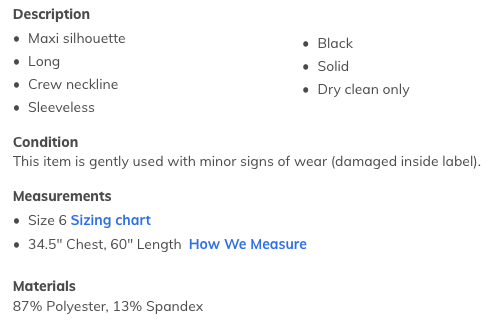
ThreadUp promises good quality clothing and even provides material descriptions. Fabric content is essential regarding sustainability, and they do an excellent job of displaying that information so it’s possible to see what you’re purchasing. 

ThredUp ships in cardboard and tissue paper keeping things plastic free!
Thrift unique, one-of-a-kind treasures from your favorite brands at up to 90% off retail! Shop high quality second hand clothing on one of the largest online thrift stores. Up to 50% Off Code: NEW. 100% Guaranteed Authentic. Designer brands. Hassle-free returns.

  1. Swap

Quite similar to Thredup, garment wise, however, the pricing is notably a steal. One of the main issues people have with sustainable clothing are the prices that come with it. Swap is undeniably inexpensive, the only downfall is the lack of material description and shipping packaging. 

If purchasing from Swap, it may be beneficial to further research your cart’s materials, if you are very particular about sustainability in the processing part. Additionally, Swap does send shipments using plastic- removing a point from the eco-friendly factor!

Get 40% off your first order!

  1. eBay

One of the most popular websites for buying and selling, Ebay is very consumer-based. You have the freedom to scroll for hours, and of course, ebay extends outside of just clothing. You can turn to it for mostly anything, making it a very reliable alternative to buying new. 

Regarding a return policy, it depends on the buyer, so definitely keep your eye out on that. 

  1. Vestaire Collection 

According to Katherine Kellogg (Going Zero Waste) “Last year for mother’s day, I bought my mom a really nice scarf from Vestaire Collective and the process couldn’t have been easier. Vestaire Collective skews more towards high-end and luxury designers. Similar to Poshmark or Depop, Vestaire simply acts as the connector pairing individual sellers to buyers. The big difference is that Vestaire authenticates their sellers items. Before the scarf was sent to my mom, it first went through authentication to ensure it wasn’t a fake item. This is a great addition of security if you’re interested in buying luxury items.”

  1. Etsy

Etsy is an online marketplace that connects sellers with buyers. It is primarily used for selling vintage items, handmade goods, art, and crafts. To sell on Etsy, you must create an account before you can open a storefront.

Etsy is also the first major online shopping destination to offset 100% of carbon emissions from shipping so every time you purchase an item on Etsy, they balance out the carbon emissions by creating a positive environmental impact. Regarding packaging, you can contact your seller and explain how you’d like the package to be plastic-free or sustainably packaged!

Be sure to check these online thrift stores out and give one a try! 

Tips for a Sustainable New Year

2021 is coming to an end, and with a year full of notable moments, we are ready to move onto the next. I’m sure you all have your own new year resolutions, but here’s a few more simple ones to add to the list. This way, you’ll improve more than just yourself- take a hit at helping our environment too!

  1. Switch our disposables for a reusable set
    1. Utensils and straws come in more reliable, good quality metals
    2. Rather than using paper towels for hand drying, invest in kitchen towels and throw them in the wash with your regular laundry load
    3. Tote bags instead of plastic bags 
    4. Reusable cotton balls and face cleansing tools for makeup removal 
  2. Careful food-shopping: When you go grocery shopping, start at the perimeter of the store. The bulk and produce areas, which are usually on the outskirts of grocery stores, are a wonderful place to start if you want to avoid the central aisles’ excessive packaging.
  1. Eat less meat: Eating less meat and dairy is the most effective strategy to lower your carbon footprint. You could try Meatless Mondays, being Vegan Before 6 like author Mark Bittman, only eating meat on weekends, only purchasing ethically and sustainably produced meat and dairy, or simply going vegetarian or vegan, or participating in Veganuary, depending on how much meat and dairy you already consume.
  1. Avoid driving solo: Try public transportation or carpooling
  2. Try packaging alternatives: Look for bamboo, glass, and stainless steel alternatives to plastic packaging.
  3. Buy less “new,” try secondhand: Limit yourself to one new purchase every month and buy everything else secondhand or make it yourself! For example, Goodwill!
  1. Shop locally: Shopping locally is a great way to reduce carbon emissions and grow your local economy. This takes into consideration transportation and packaging for more commercialized stores. 
  1. Choose organic alternatives: Choose organic whenever possible. Organic farming uses fewer resources, protects bees, prevents air and groundwater pollution, and increases biodiversity, which are all critical to sustainability in the truest sense of the word. 
  1. Say no to fast fashion! Gone are the days of overpriced, irritable hemp dresses. With the rise of climate based advocation, brands have been making themselves more accessible to the general public with cute styles and good prices.
  1. Keep your eyes open and influence your community: Send an email or leave a review every time you visit a restaurant or store with excessive plastic packaging, requesting sustainable alternatives. You could do the same with online shopping for clothes, everyday materials etc. 

Even if you can’t do it all, you start making a difference one step at a time. Pick up one point from the list, see if it works out and then add more with time. 

Happy new year to you all, and best of luck with your resolutions!

The Fashion Industry’s Efforts at COP26

Despite sustainability’s numerous jumps in recent years, committing to net-zero and relying on carbon-offsetting procedures will (probably) never be enough to bring us back where we should be. These means will only attempt to undo the unsustainable emissions that have already been collected in the atmosphere. Even with motives like “carbon positivity”- where we utilize more carbon than we emit- we need changes on a bigger scale. Please, don’t regard my negative tone as “biased”; I’m simply giving you a realistic rundown. 

The global climate summit wrapping up in Glasgow is known as COP26, with COP standing for Conference of the Parties. In diplomatic parlance, “the parties” refers to the 197 nations that agreed to a new environmental pact. The United States and other countries ratified the treaty, which aims to combat “dangerous human interference with the climate system” and stabilize levels of greenhouse gas emissions in the atmosphere. This is the 26th time countries have gathered under the convention. Hence, COP26 (“What does COP stand for?”). We’re at a place where the fashion industry’s emissions are actually double what they should be in order to stay in line with the Paris Agreement’s goal of keeping global warming to 1.5 degrees celsius (Chan). The enormity of the situation called for the  United Nations Fashion Industry Charter For Climate Action to gather and set initiatives that rule out specific ways of reading CO2 emissions in order to keep them level with the Paris agreement.

So far, specific changes include increasing the percentage by which CO2 emissions will be reduced- however the real question of how is not as easy to come by. Brands like Burberry, Chanel and Gucci have committed to halving greenhouse gas emissions by 2030, rather than solely decreasing by 30% like the original plan was. 

These commitments only do so much, so setting transparent, specific goals can also ensure reliance. The Charter has also set a new target for 100% of “priority” materials – such as cotton, viscose, polyester, wool and leather – to be low climate impact by 2030. The agreement specifically points to materials that can be recycled in a closed loop, and are deforestation-free, conversion-free (meaning natural ecosystems are not destroyed in the process) and produced using regenerative practices (Chan). 

Transparency with the pubic is as important as transparency within the creative process. Brands must work with their suppliers to track the supply chain and recognize which areas are in need of change. The new Charter pledges tier one and tier two providers to phase out coal by 2030, with zero new coal power by 2023, as well as assisting suppliers in implementing science-based targets by the end of 2025.

To track progress and ensure efficiency, brands have a year from now to submit their plans regarding specifics on how they will reduce their emissions, and will send reports every three years to serve as updates. These plans will be evaluated on effectiveness through constant monitoring to guarantee we reach out carbon emission goals by 2023. 

With further research, I came across a simple, general list that could be a starting point for most large brand names. 

  1. Reducing energy usage

This can be done through utilizing more energy efficient lights, appliances, switching to a green web hosting company etc. 

  1. Eliminate single use plastic

Every time someone discards a plastic straw, bag, cup, or other packaging materials, they contribute to climate change.Cafeteria silverware, disposable coffee cups, and plastic water bottles can all be easily replaced with reusable alternatives. Reusable replacements cut carbon emissions while also lowering waste disposal expenses.Additionally, for shipment, using degradable material for shipping and not overpacking can decrease waste buildup by a large margin. 

  1. Tracking supply chain efficiency

Increased transparency with suppliers allows companies to see where resources are wasted through inefficient operations. 

Take a look at Vogue’s “How Fashion Is Ramping Up Its Climate Efforts at COP26″ for a more in-depth analysis. 

An Ethical Guide to Tackling Black Friday & Cyber Monday

At any other time of the year, it’s easy to preach sustainability and anti-black Friday mindsets because of the holiday’s celebration of overconsumption. However, as Thanksgiving break rolls in and you see everyone around you doing clothing hauls and stores flaunting 50% off sales, it becomes hard to resist the temptation to go out and shop; especially when you give yourself the excuse that it’s for the holidays and you’re gift shopping. 

As companies slash prices for the kickoff of the holiday shopping season between Thanksgiving Day and Cyber Monday, shoppers overconsume electronics, plastics and fast-fashion apparel — and our planet ultimately pays the price. According to the National Retail Federation, an estimated 164 million people plan to go shopping between Thanksgiving Day and Cyber Monday this year (“Tips For Conscious Consumerism”). Along with this, on a personal basis,  Americans are expected to spend an average of $837 on gifts this holiday season (“5 Ways to Shop”).  

As a high schooler, I can confidently say that I understand the external pressures as well as anyone. I can also say I have emerged strong (following Black Friday) buying nothing. So, take my word, and here’s a guide on how to deal with Black Friday more sustainably!

  1. Don’t buy anything!

Of course, this is easier said than done, and the most obvious solution- but consider it. If you find yourself in a position where you have no wishlist, no research or any necessities during Black Friday, then there really is no reason to shop. While most people do wait for this time of the year to splurge the most, if you aren’t in that group, then the most logical reason is to keep your distance. 

  1. Make a wishlist before you go

Make a list of goods you’ve been intending to buy all year before Black Friday and Cyber Monday. Include any items you want to buy as gifts for others. First you make a list of necessities; things you need to replace, something you’ve been saving up for, etc. Then you make a second list of things you want. These should be items you have given some thought to, but aren’t vital. If you can see yourself using these items on multiple occasions and if you find a good deal on them, then it’s a good buy. If you see yourself falling into the trap of purchasing just because something is on sale and you’ve never actually thought about it- you catch yourself. That is why the wish list is helpful; by going in with an idea of what you’ll come out with, you avoid unnecessary purchases. 

(I actually do this one every time I go shopping!)

  1. Purchase essentials first

You definitely have a few favorite goods that you use on a regular basis, and some of them are probably more expensive than you’d like. Black Friday and Cyber Monday are excellent opportunities to stock up on home essentials.

  1. Combine shipments 

Instead of ordering per individual, plan ahead and order as much as you can all at once. Then, rather than  20 individual boxes and shipments, you can buy for the entire family in one transaction, one shipment, and one payment. This will greatly reduce your carbon footprint outside of over-purchasing.

  1. Stay mindful, participate in Giving Tuesday!

Launched in 2012, Giving Tuesday is a heartening development in the wake of Black Friday and Cyber Monday mayhem — and a way you can take action as an individual. This global movement across more than 150 countries encourages charitable donations and community action, and it serves as a good reminder to get involved in causes you care about. This Giving Tuesday, consider volunteering to clean up trash in your local park, starting a fundraiser, or offering your professional services for free to a short-staffed nonprofit organization or mutual aid in your area. You can also simply donate money to your favorite charity or organization, like Oceana! (“Tips For Conscious Consumerism”)

In addition to all of these, if you do end up shopping, go for more sustainable brands: 

Check out my blog post with brand specifics: Best Affordable + Sustainable Fashion Brands

Have a happy Cyber Monday and stay sustainable! 

Is Halloween An Excuse to Buy Fast Fashion?

Short answer, no. There’s never an excuse to buy fast fashion with the wear-it-once mentality. 

The most recent trend we’ve seen lately, regarding Halloween costumes, is buying a whole new set you’ll wear one time and then throwing it out or donating it because it can’t be reworn. This creates a multitude of problems, starting with the wasted garment material. If the clothing is donated, it will likely go to the trash because of the cheap material most read-made costumes come in. Additionally, goodwill stores have proven to be highly selective with their donation process, so even if the clothing is in an okay state- more often than not, it will end up in a landfill. So, while the warm sentiment is there, the fact is, up to 90 percent of clothing donations to Goodwill, Salvation Army, and other charities ends up with textile recyclers, according to a Saturday Evening Post report.

For clothes that don’t immediately land up in your trash can or recycling, it will sit in your closet collecting dust for years to come- waiting for that inevitable moment. The main idea is inarguable; Halloween is fueled by consumerism. The carbon footprint left behind following October 31st each year is unmatchable when it comes to garment unsustainability. 

According to the National Retail Foundation, the expected consumer spending on Halloween-related items was $10.14 billion. To magnify our topic on clothing sustainability, it is estimated that 4 in 10 costumes are only worn once (Fairyland Trust). Halloween presents a different idea with one-time use costumes, which goes against the sustainability agenda of promoting higher-quality goods that will last longer and eliminate fast fashion.

Despite the fact that there are more environmentally beneficial ways to dispose of costumes, only about 13% of the material is recycled internationally, and just 1% is repurposed into new apparel. Due to the failure of costumes to be fully recycled, I propose that you construct your own costumes, restricting your purchases to rewearable items or (at most) inexpensive accessories to really pull off your look.

In response to the unsustainable mentality that comes with Halloween, campaigns around the world such as Sew Spooky encourage people to be creative with their costumes. Through costume workshops and swaps, people can get involved with their community and celebrate Halloween while still being conscious of the environment. Keeping the environment in mind during the holidays can make a significant difference (Scot Scoop).

A list formulated by Harvard Education offers different ways of celebrating a greener Halloween. 

Check out 6 Tips for a Greener Halloween.

This list includes:

  1. Vintage, DIY costumes
  2. Getting craft with your fall decorations
  3. Throw a green party
  4. Purchase sustainably and locally grown pumpkins
  5. Pass out organic, gmo free candy
  6. Reuse!!!

Be sure to share this list with your friends for a greener Halloween next year!

Biodiversity and Fast Fashion’s “Positive” Feedback Loop

First, to define biodiversity, it’s the variability of life on Earth. The different kinds of life you will find in an area is classified as biodiversity. To go back to the importance of the food web, each element in an ecosystem plays a huge role, and for one to be forcibly changed will alter the whole system. 

There are different ways ecosystems react to changes- and changes can vary from a resource decrease because of human interference or the introduction of invasive species. As of right now, there are prevalent examples on both of these subjects; the climate crisis and carbon emissions are a result of human activity and Spotted Lanternflies are the current invasive species taking New Jersey by storm. 

However, the balance of nature is a theory that proposes that ecological systems are usually in a stable equilibrium or homeostasis. This means, with change- an environment will always take measures to keep balance and any negative change will be stabilized. So essentially, based on how magnified the change is- it can have negative or positive feedback. 

For most manmade changes, the impact is bad enough that nature can’t counter the impacts. This leads to events that can create a positive feedback loop- which means that changes occur and lead to more changes. For example, global warming causes ice to melt- which makes water levels rise and increases the area for the sun to reflect off of and create more heat- once again starting the cycle. 

So what’s the positive (not so positive) impact loop in the fashion industry? In one general statement, the whole cycle of fast fashion can place you in a never ending loop. It starts with manipulation from the companies themselves. 20 years ago, there were 4 fashion seasons. Every quarter, brands would release new styles promoting the change of season. Now, there are 52 seasons with different styles released every week, in unforgettable patterns. By promoting clothes that can’t be reworn because of bright colors and trendy designs, consumers are forced to constantly purchase more and more. The media and fashion corporations have put pressure on individuals, making them think rewearing clothes is not a good look. In addition to buying fad styles to keep up with the ever-changing seasons, these companies make bad quality, cheap clothes that crumble after 3 washes. This forces consumers to go out and buy more clothes- because the last ones couldn’t sustain enough wears. 

This crisis moves from a consumer issue to an environmental one, explained by BioMedCenter on the topic of environmental health in The global environmental injustice of fast fashion.

Environmental justice is defined by the United States Environmental Protection Agency, as the “fair treatment and meaningful involvement of all people regardless of race, color national origin, or income, with respect to the development, implementation, and enforcement of environmental laws, regulations and policies” [5]. In the United States, this concept has primarily been used in the scientific literature and in practice to describe the disproportionate placement of superfund sites (hazardous waste sites) in or near communities of color. However, environmental justice, as it has been defined, is not limited to the United States and need not be constrained by geopolitical boundaries. The textile and garment industries, for example, shift the environmental and occupational burdens associated with mass production and disposal from high income countries to the under-resourced (e.g. low income, low-wage workers, women) communities in LMICs. Extending the environmental justice framework to encompass the disproportionate impact experienced by those who produce and dispose of our clothing is essential to understanding the magnitude of global injustice perpetuated through the consumption of cheap clothing. In the context of Sustainable Development Goal (SDG) 12 which calls for sustainable consumption and production as part of national and sectoral plans, sustainable business practices, consumer behavior, and the reduction and elimination of fast fashion should all be a target of global environmental justice advocates.

So, in the realm of fast fashion, every move impacts another and places us back in a never ending circle. The only way to remove yourself from that lifestyle is to make an effort to push out. 

Sustainable Stars at the 2021 Met Gala

With the sustainability trend growing on the red carpet, it’s no surprise that this year’s Met Gala was full of eco-conscious looks. The 2021 theme was “In America: A Lexicon of Fashion,” so we saw a wide range of looks- varying from political statements to old-hollywood. This year was also the first to offer an entirely plant-based menu, so along with fashion sustainability, we saw it with the food too! From Alexandra Ocasio-Cortez to Billie Eilish, here’s a list of the most sustainable and fashionable Met Gala outfits.

Alexandra Ocasio-Cortez: Brother Vellies

Met Gala: AOC is still defending her 'Tax the Rich' dress - Los Angeles  Times

AOC wore her own statement piece, a “Tax the Rich” dress. Brother Vellies is known for creating homemade dresses (sustainably handcrafted) pieces from artists internationally. The brand began in Brooklyn, founded by Aurora James. Ocasio-Cortez claimed she was proud to work with James,”sustainably focused, black immigrant woman.” Additionally, the dress was borrowed from a Fashion Library, making it more sustainable than purchasing and never rewearing. By promoting clothing libraries, you prolong the service life of garments, therefore reducing the demand for new clothing and slowing down the fashion cycle.

Billie Eilish: Oscar de la Renta

Billie Eilish wore her Oscar de la Renta Met Gala dress on one condition -  CNN Style

Eilish’s Grace Kelly inspired gown was created by the already-sustainable Oscar de la Renta. . She only agreed to walk the red carpet in the show-stopping dress if the brand agreed to stop using fur in future collections; and they did. So, Eilish convinced Oscar de la Renta to ditch fur. 

Adam Mosseri and Monica Mosseri: Bode and Kamperett

Adam Mosseri and his wife monica wear KAMPERETT met gala 2021, net worth |  Mebere

Head of Instagram Adam Mosseri wore a geometric suit repurposed from vintage fabrics by Bode, while his wife wore a Kamperett gown made from dead-stock materials.

Nia Dennis: Adidas by Stella McCartney

Watch Viral Gymnast Do Performance at the Met Gala

Gymnast Nia Dennis walked the Met Gala 2021 red carpet in a bright blue bodysuit and an all-vegan Adidas by Stella McCartney netted wrap and Earthlight sneakers. The shoes are made of Parley Ocean Plastic, a brand which recycles plastic waste found in the ocean. 

Ella Emhoff: Adidas by Stella McCartney

Kamala Harris' stepdaughter Ella Emhoff hits 2021 Met Gala

Rising fashion icon, Ella Emhoff stunned in red. Similar to Nia Dennis, she wore a beautiful red diamond bodysuit and Earthlight trainers from Adidas by Stella McCartney.

Jennifer Lopez: Ralph Lauren

MET Gala 2021: Jennifer Lopez Rocks 2 Jaw-Dropping Looks Back to Back --  but Where Was Ben Affleck?

JLo proved, once again, there’s no place or reason for real fur on the red carpet (or anywhere)! She wore a faux fur bolero jacket along with rodeo inspired accessories. 

Tessa Thompson: Iris Van Herpen and Rombaut 

Actress and producer Tessa Thompson wore a pair of vegan cowboy boots to the red carpet by Rombaut, which uses various vegan and upcycled materials such as cactus leather, apple leather and felt made of recycled polyester. 

Check out more links on this year’s Met Gala!

Met Gala Red Carpet Sustainable Looks

Oscar de la Renta Finally Ditched Fur. We Can Thank Billie Eilish

8 SUSTAINABLE RED CARPET MOMENTS FROM THE MET GALA 2021 

What is H&M’s Fashion Resell Program?

The first question to be asked: Is H&M fast fashion? 

According to Google, “H&M is the world’s second largest fast-fashion business, meaning it offers thousands of new items every week which encourages waste that ends up in landfill. The business model encourages the rotation of fashion trends and new garments, which in turn encourages the public to always want more” (Wear Next). 

H&M is one of the most successful fast fashion brands, thriving off their 52-season motto. However, the company has faced its own share of hatred due to the “promotion of ‘disposable’ fashion and constant rotations of new trends and products [which have] a huge environmental impact.” As a result, an increasing amount of cheap clothing ends up in landfill after only a few wears (“How Ethical is H&M?”). 

To fight critics regarding their unintentional lack of empathy toward environmental and humanitarian causes (a consequence of any fast fashion company)- H&M has decided to jumpstart a clothing reselling program. 

With the Resell Market growing, along with a fondness for thrifting and self-made clothing- H&M has started their ““H&M Rewear,” a “one-stop digital customer to customer (C2C) resell destination” powered by London-based Resale-as-a-Service (RaaS) technology company Reflaunt” (Fashion United).

The general idea of C2C is to demote fast fashion culture with the constant cycle of buying and disposing. Canadian customers are able to buy and sell previously-worn fashion items without any brand restrictions. Meaning, this resell motive, though created by H&M, allows items from any company to be resold. 

Frederic Tavoukdjian, country manager of H&M Canada, explains “[We] want to provide a destination for Canadians to become active participants in circularity and find new homes for garments from any brand in their closet.” Overall, he stresses the importance of being inclusive to all brands (Fashion United).

This resell program is the latest step in recommerce. With the launch date getting closer (set to release on September 7th), the company’s sustainable development goals are simultaneously being reached. The new system enabled a search engine for H&M products which works by entering the product number from care label; picture retouching for a “premium visual experience”; and a price recommendation algorithm to help sellers improve their chances of selling successfully.

“Although we offer garment collecting in our stores, we felt it was important to find a second way for our customers to recycle their clothing,” said Geraldine Maunier-Rossi, head of marketing for H&M Canada. (Fashion United).

The Environmental Cost of Shipping: A Brief Explanation

America’s obsession with fast shipping is no secret, now more so than ever. You could purchase a whole wardrobe without having to step a foot out of your house- sometimes getting your delivery within the same day. The question is: Is the environmental impact that comes with shipping worth saving you one trip out the house? 

With Amazon’s announcement of same-day shipping for Prime members, other name-brands were forced to up their own delivery rates. As CNN wrote, “Fast lead times at no extra charge can make the difference between winning the sale or losing it.” Following Amazon, Walmart revealed their new free one-day shipping (no membership needed) and Target was holding steady with their own free one-day shipping for their cardholders. 

For the success of their products, brands are right to constantly improve their delivery rates. According to a recent UPS report, 43% of consumers consider delivery costs when researching products online. Amazon does not disappoint their members,  boasting it offers more than 100 million items for two-day delivery, more than 10 million for one day and more than three million for same day. According to the research firm Rakuten Intelligence, over the past two years the time from purchase to delivery has declined from 5.2 days to 4.3 days for other retailers, however Amazon is still faster- with an average of 3.2 days. 

UPS’ head of global sustainability, Patrick Browne explains “The time in transit has a direct relationship to the environmental impact,” says, director of global sustainability at UPS. “I don’t think the average consumer understands the environmental impact of having something tomorrow vs. two days from now. The more time you give me, the more efficient I can be.”

Miguel Jaller, the co-director of the Sustainable Freight Research Center at the Institute of Transportation Studies at UC Davis, found that if a delivery van makes less than about six stops on a trip, the emissions advantage disappears. With more stops per trip, there still may be more nitrogen oxide involved (CNN). The carbon emissions from shipping can be beneficial if done at the proper ratio. 

Overall statistics explain: 

Shipping is a growing source of transport greenhouse gas emissions and a major source of air pollution, causing health problems, acid rain and eutrophication. It’s estimated that between 2007 and 2012 the shipping sector emitted about 1,000 Mt CO2 per year, about 3.1% of annual global CO2 emissions (Transport Environment).

Why are brands shifting to more sustainable packaging?

A common topic in the realm of sustainability is sustainable products, and although product sustainability through both resources and production is imperative- there are other equally important factors that are less talked about. Product packaging plays a huge role in the ecological footprint of any company. Creating a net-zero product but shipping it in bubble wrap and styrofoam will completely overlook the point of creating the ecological item. 

The idea of sustainable products is to create something using eco-friendly methods to improve quality of life in terms of mortality, age, diseases, and illnesses. It ensures the safety of families and the planet from a long term view. However, if this environmentally-friendly item was being sold and shipped around in nonbiodegradable packaging, then the “eco-friendliness” of the item is a smaller degree. It’s essentially creating more waste than it would if it did not exist. 

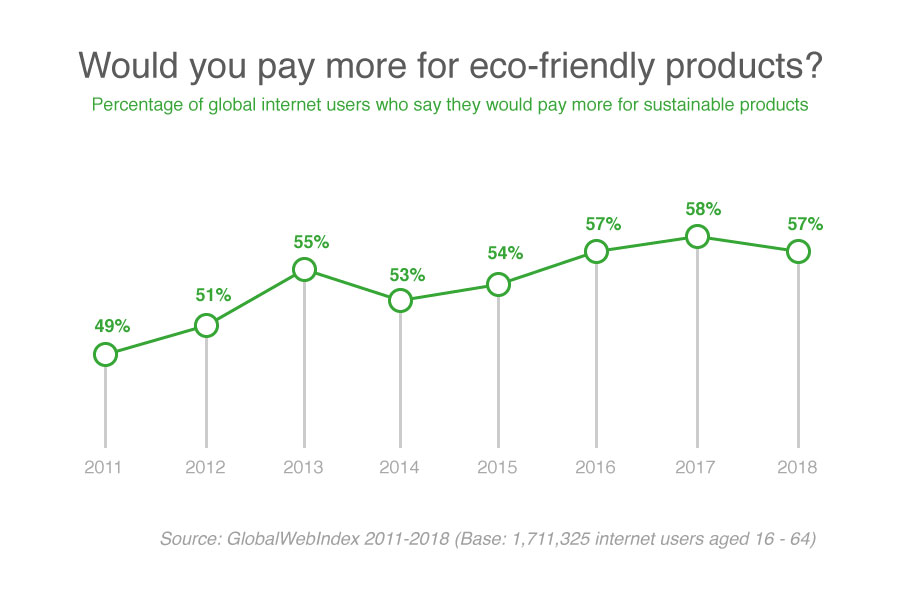
Fortunately, the rise of sustainability advocation has reached consumers and impacted their buying habits. According to the World Economic Forum, Consumers are willing to pay more for goods and services from sustainable companies.

With public interest in sustainable packaging, companies have a larger motive to spend their finances on backing up their products with ecological packing. The motive also includes corporate social responsibility. 

CSP is a motion to spread positivity around the world, including both the environment and people. More and more companies are setting sustainable development goals, one being Walmart. Walmart’s CSO Kathleen McLaughlin says Walmart’s goal is to take an assertive approach in transforming the retail sector for sustainability. By 2025, the company aims to have 100% recyclable, reusable or compostable packaging.

It’s important for huge name brands like Walmart to create goals regarding their SDG’s because smaller partner companies take notice and learn. Seeing larger brands make their goals widely known connects corporate social responsibility and the fact that other retailers expect brands to be more sustainable. Retailer Target established five new sustainable packaging goals in 2017, noting customer expectations as the driving force. One of the stated goals was to eliminate polystyrene, which helps to reduce ocean plastic pollution while also making it easier for customers to figure out how to recycle it. Another goal is to include the How2Recycle label on more Target packaging so that shoppers can easily figure out how to recycle each item. Target’s revenue increased from $69.5 billion in 2017 to $75.36 billion in 2019 since the goals were established.

Carbon emissions and greenhouse gases are also motivations for greener packaging. HP began thinking about their own packaging in order to minimize their environmental impact. They worked with BillerudKorsnas to make notebooks out of friendlier materials- therefore lowering packaging materials by 29%. Another benefit for HP is that the box weighs less, which lowered shipping costs and reduced transportation emissions. 

“Working with BillerudKorsnäs has enabled us to offer a notebook box that weighs less, reduces our global carbon footprint and lowers costs, while protecting our products during shipment. This partnership supports our efforts to develop products, as well as the packaging used to ship them, that are more sustainable for our company and our customers.” (BillerudKorsnas).

A decreased carbon footprint has also proved to be cost efficient, saving substantial sums of money. As stated by BillerudKorsnäs: when you work with a sustainable packaging partner like BillerudKorsnäs, you will get custom packaging that is optimised both to lessen environmental impact and increase your efficiency. That means:

  • Less waste in packaging materials
  • Less waste in packaging design to increase sustainability in manufacturing, operations and the supply chain

The result is increased savings for a business.

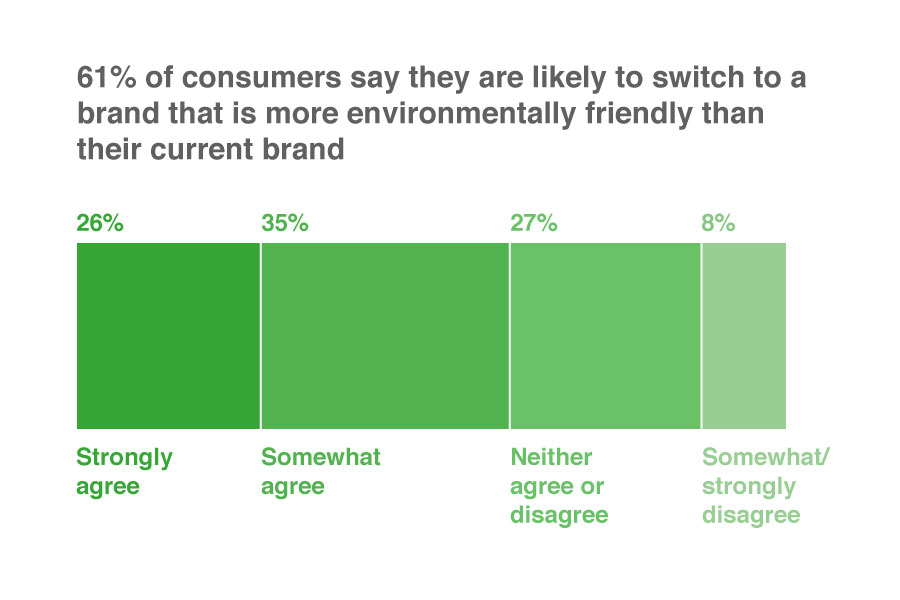
The last point regards consumer demand. Consumers who care about environmental impact are willing to pay more money to companies that share the same values. Market research company GlobalWebIndex reports that 42% of U.S. and UK consumers seek out products that are recyclable or that use sustainable materials when shopping. 

Source: GlobalWebIndex

Consumers who care about the environment are ready to pay more for eco-friendly products and are willing to switch from less to more green brands.

Ultimately, in order to maintain a loyal consumer base, companies will want to keep their sustainable methods. This will reap both social and environmental benefits.