Essential Vs. Nonessential Items During Covid-19

The Corona Virus outbreak has impacted every life on the planet. People are living their lives under a new set of rules and are stopped from doing basic things that were previously openly allowed.

Covid-19 has also shined a light on the difference between essential and nonessential items, as there are now restrictions in stores and rules placed by the government; closing popular locations, limiting items purchased in stores and so much more. Through this pandemic, people can begin to see how many items we felt were necessary for survival, have really just manipulated us into believing they were a lot more important than they actually are. 

Here, I will be formulating a list of items that I have learned were either essential or nonessential during my experience of Covid-19. 

Essential Items:

  • Cloth face masks.

It is recommended to wear one every time you leave your house, to protect others in case you unknowingly have the virus. Cloth masks would be most preferred because they can be reused.

  • About 3 weeks of food. No more than 4 weeks. 

There is no reason to hoard all the materials in the shopping aisles. Make sure to take as much as you need to keep you away from grocery stores for as long as possible, while at the same time being courteous. 

  • First Aid Kits/ Over-The-Counter medicine. 

It is better to have these items in your home, for easy access in case of any emergencies. But once again, do NOT hoard supplies. 

  • Soap and hand sanitizer.

Currently, it is difficult to get a hold of either of these items, but once they are available it would be beneficial to purchase it. 

Reference  WIRED’s guide to making your own hand sanitizer !

Nonessential Items:

  • MEDICAL GRADE FACE MASKS. 

There is a shortage of face masks. Any of these that are available should be saved for the use of medical personnel only! Any N95 face masks you have purchased should be directed to a healthcare facility as soon as possible.

  • EXTRA toilet paper and paper towels. 

There is a major shortage on these two items, do not buy an unnecessary amount. Those who already have purchased large amounts, do not waste it. Wasting these products will not only hurt the planet, it will also hurt your waller.

  • New Clothes. 

I have seen an endless amount of clothing hauls from people who are purchasing new clothing out of boredom. Do not do this! There is no reason to buy new clothing during a pandemic! Nobody should be leaving their house for recreational purposes, so there should be no need to buy 15 sets of new clothing to keep up with the current trends. Instead, try revamping your closet by restyling old clothes.

Advice on the purchase of nonessential items include recognizing the money you are also spending on these items. In addition to the possibility of nonessential item purchases putting warehouse and delivery workers at risk, it is also known that the economy is unpredictable. Therefore, spending money on products with little intention of use would not be recommended, considering the possibility of an unstable economy; especially keeping in mind our place in the global pandemic. For example, regarding families who receive stimulus money, if the extra money from the government is not needed for bills, it is recommended to put the cash in reserves, in case of an unfortunate situation where the economy does not recover quickly. 

Making wise purchases is just as important as wise actions during these times. Stay safe and healthy.
5 Tips For a Sustainable Closet

5 Easy Ways to Make a Change to Sustainable Fashion 

Currently, the majority of the world is living through a global pandemic. While being locked up in our homes, forced to stay in a shelter-in-place position, there are always more ways you can change small things in your life to live more sustainably. Here are some tips and tricks that I have been inspired by. They are easy, quick and beneficial!

  1. Choose Ethical Brands 

As consumers, it is important to pay attention to how your clothing is made, and then disposed of. One way to make sure you do not encourage Fast Fashion brands is by paying attention to which brands are transparent about their process of making/ disposing clothing and their circular story. Even if the stories are not perfect, knowing that these brands are honest, depicts that they have the right intentions. If you understand the story of each product you purchase, then you are a “conscious consumer.” “Do your research, as some companies pose as being ethical/sustainable but actually they’re not. Also, before you buy anything, really try and think about if you’re going to use it and wear it enough. I like the 30 wears idea and try and adhere to that.” @englishlassinla

The 30 wears idea brings us to our next tip, choosing quality over quantity through classical pieces.

  1. Opt for Classical Pieces 

Classic fashion is something that lasts for years and is widely accepted by a range of people. They are the clothing pieces that can be worn and re-worn, styles and restyled in countless numbers of ways, all while looking as fresh as though it were your first wear. Here, it is also important to drop the mindset of quantity over quality. When shopping in fast fashion stores, you may find the price of four pieces of trendy “in” clothing matches the price of one piece of more traditional clothing from a more ethical store. Think about all the shopping you do in a year, and how much of it is the result of poor-quality clothes or items that have gone out of style and need to be replaced. While buying quality clothes might require more of an investment, they also last much longer – both in time and in taste – meaning you’re going to get your money’s worth.

 Some examples of Timeless Fashion Include:

  • Black Pumps
  • Trench Coats
  • Dark Wash Jeans
  • Classic Button Up Shirts
  • Classic Blazer
  • Little Black Dress
  • White Tee

Here, remember “quality of quantity.” In this situation, and any other, you must keep this in mind:

Purchase clothing that can be paired with more than 30% of your closet.

If the piece of clothing you are looking at can be styled with at least 30% of your closet, then that will guarantee multiple uses, which makes the clothing worth the money being spent on it. Often, clothing that are fads, do not check off this box, because they stay in fashion for one season, and then find themselves disappearing. It is important to stay away from such clothing, because they cannot withstand many uses, and do not stay trendy for long enough to make the most of it. By following fast fashion trends, you create more waste than necessary, ultimately harming the environment through the disposal process of these garments. 

  1. Clothing Must Sustain Washes 

The better quality the clothing is, the longer it stays looking fresh and crisp. Many fast fashion attires do not make it through ore than 5 washes before looking as though you’ve had it for years. It’s not a good look. The bad quality will cause you to throw out the clothing, therefore creating a larger pileup of trash in the landfills. Additionally, if your clothing cannot sustain more than 30 washes, then it is a wasted purchase. Be wise, do not waste your money on clothing that cannot sustain washes. 

  1. Avoid Impulse Buying

If the clothing you are looking at checks off the first two boxes, then you are on the last, and final checkbox. When the clothing catches your interest, it is best to leave it, sleep on it, and then come back the next day after sleeping on it, and see if you still feel strongly about it. If you sleep on it and the next day you have lost interest in the garment, then you know it would have been an impulse buy, and wasted away sitting in your closet. If you are still interested in the purchase the next day, then, by all means, go buy it! 

  1. Make sure to have a Sustainable Mindset

It is important to remember that making the change to a more sustainable lifestyle will have more long term effects than immediate benefits. When purchasing new clothing, you will be tempted to keep up with the trends and follow along with your friends, but you need to remind yourself that long term, you will be making a better difference, both on the wellbeing of your own wallet and the planet. It may be a change that will take time to adjust too, but in the end it will be worth it. 

These 5 tips will automatically move you in the right direction and promote a more sustainable and fashionable lifestyle!  

Be sure to check out your local, more ethical clothing stores and brands, rather than large factory businesses!

An Introduction to Fast Fashion

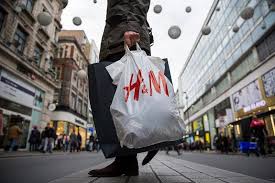
Since the 1990’s, many popular clothing companies such as Zara, H&M, and Forever 21 have begun to take part in the infamous trend, known as “Fast Fashion.”

What is Fast Fashion?

The fashion industry and its impact on the environment has become an increasingly larger problem.  Every year the world as a whole consumes more than 80 billion items of clothing, and these clothes will eventually play a large role in resource and waste pollution. People are consuming more and they want it for cheaper prices; companies producing these cheap items (who make large profits) want the clothes as fast as possible, this creates a trend called fast fashion. The idea is that fast mass production will require the use of cheap labor, which makes the cost of the clothing cheaper. The cheaper the item is, the larger success it will have from the buyers, ultimately maintaining the companies’ economic status.

The very concept produces a cycle filled with negative outcomes, starting from the way the clothing is made, all the way to it’s disposal. Fast Fashion goes hand in hand with the idea of cheap labor. Since the basis of fast fashion is essentially creating clothing that lasts a few weeks and even fewer wears, companies need to constantly be ready with new designs, for the factories to quickly produce. Speedy mass production and cheap labor makes clothes cheaper for the customers, thus promoting the brand even further and leading to more economic success. The constant need to produce more and more clothing results in factories producing even more waste, which will eventually be disposed of in even more harmful ways. Only ⅕ of discarded clothing and waste products will be recycled, while the remaining 80% goes to waste disposal streams. From there, 70% goes to landfills and 30% gets incinerated. With landfills filling up, there is only so much space Earth can provide for trash disposal, and overtime new forms of disposal must be discovered. Incinerators cause more air pollution than the factories do, and together it hurts the atmosphere and Earth’s ozone layer. To keep up with the constantly changing trends, people have begun buying clothing more regularly than necessary.  The average person in 2014 owned 60% more clothing items compared to the average consumer in 2000, while wearing the clothing for half as long. Americans bought five times the amount of clothes in 2014 as they did in 1980. Newer clothes, made with less expensive and short lived material, leads to only being able to wear those clothes a couple times before being forced to replace them. Waste numbers will keep building, and the cycle will continue to harm the planet.